Back to the table

Eventbrite Brand Studio

Five years, from one-off partner pages to a component system a whole team used to ship pages without a designer.

Company
Eventbrite
Role
Web Brand Designer, then UX/UI Designer on Brand Studio
Years
2017–2022
Scope
Partner event pages, landing pages, a component library in Wagtail CMS
Partners
Spotify, Budweiser, Nintendo
2017–22
5 years
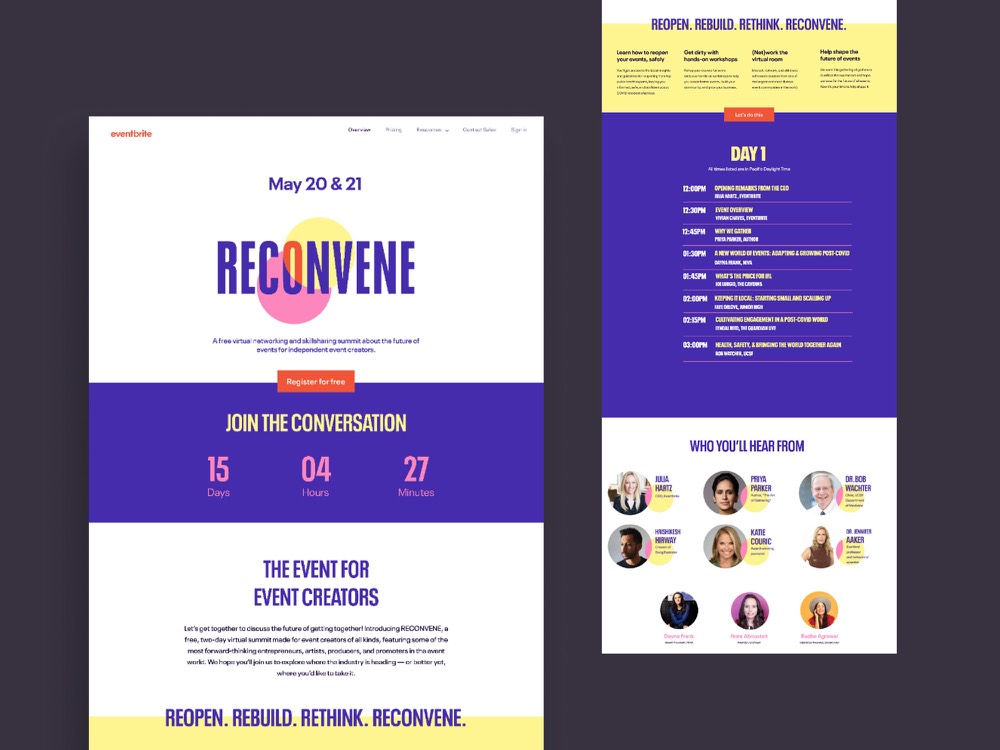
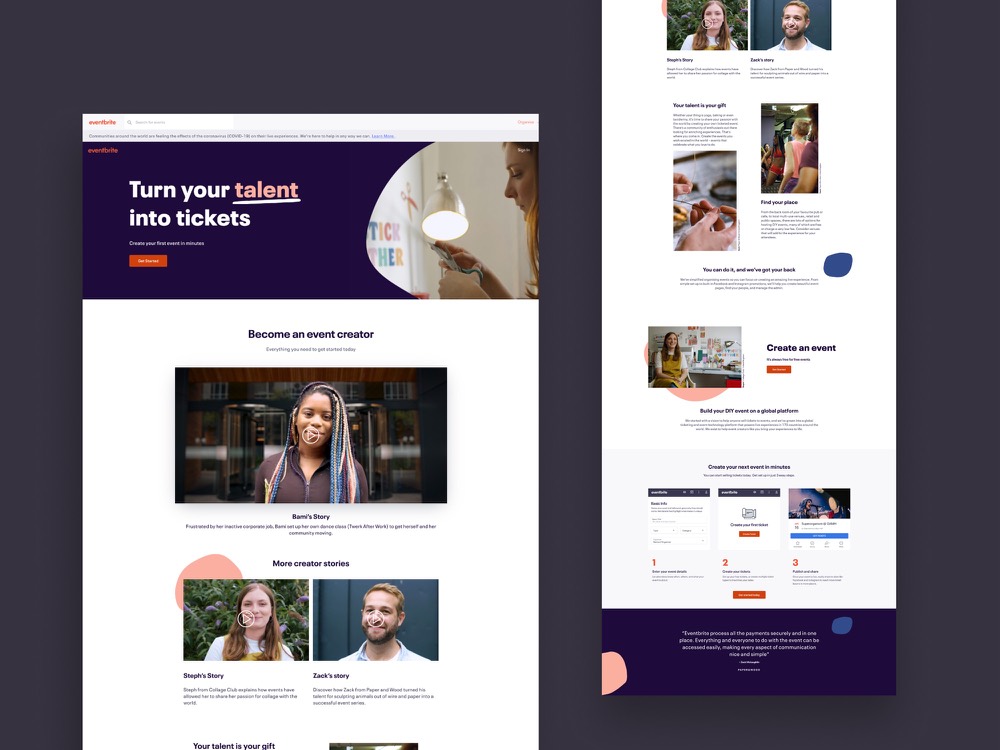
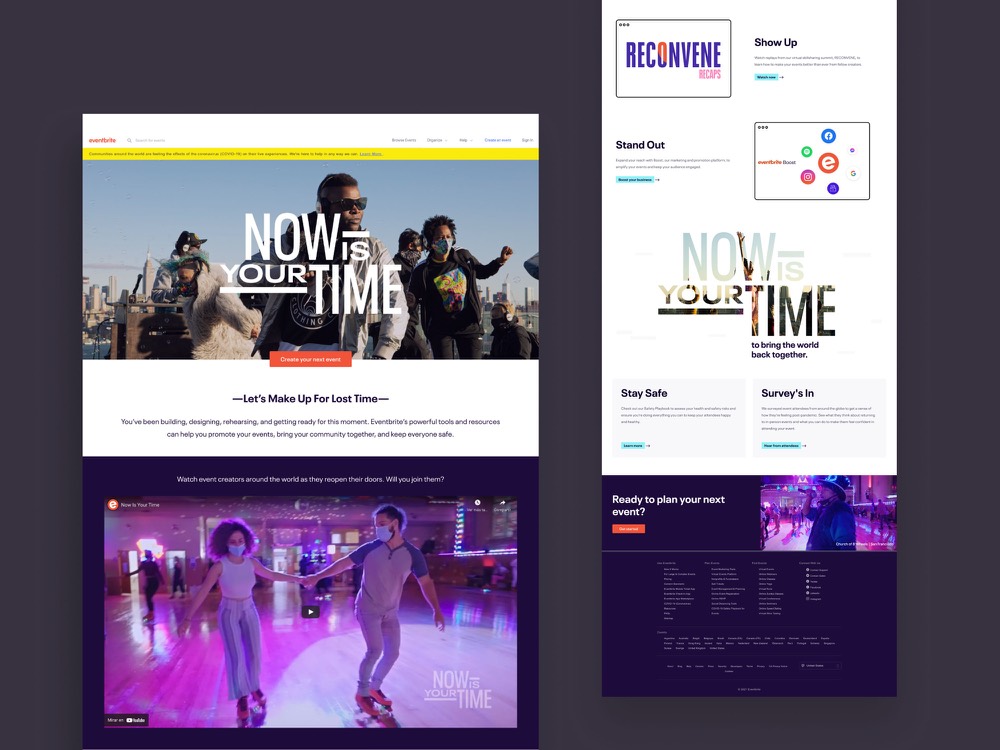
Eventbrite pages I designed, laid out on a slant: music, Boost, Collections, Reconvene, Pride and more landing pages on desktop and phone, plus the Spotify and Nintendo Labo event pages.

I started at Eventbrite designing one event page at a time, and left with a component system the marketing team, my main users, could build pages with on their own.

One page per partner. For about two years I designed custom event pages for partners like Spotify, Budweiser, and Nintendo. Each one had to feel like the partner and still look like Eventbrite, usually on a tight launch date.

The only web designer in Brand Studio. When I moved to Brand Studio, every landing page at Eventbrite came through me. Designing them one by one stopped scaling.

Parts instead of pages. I designed reusable components in Wagtail, the CMS the site ran on. The team could put together and update a landing page without waiting for a designer, and the brand stayed consistent.

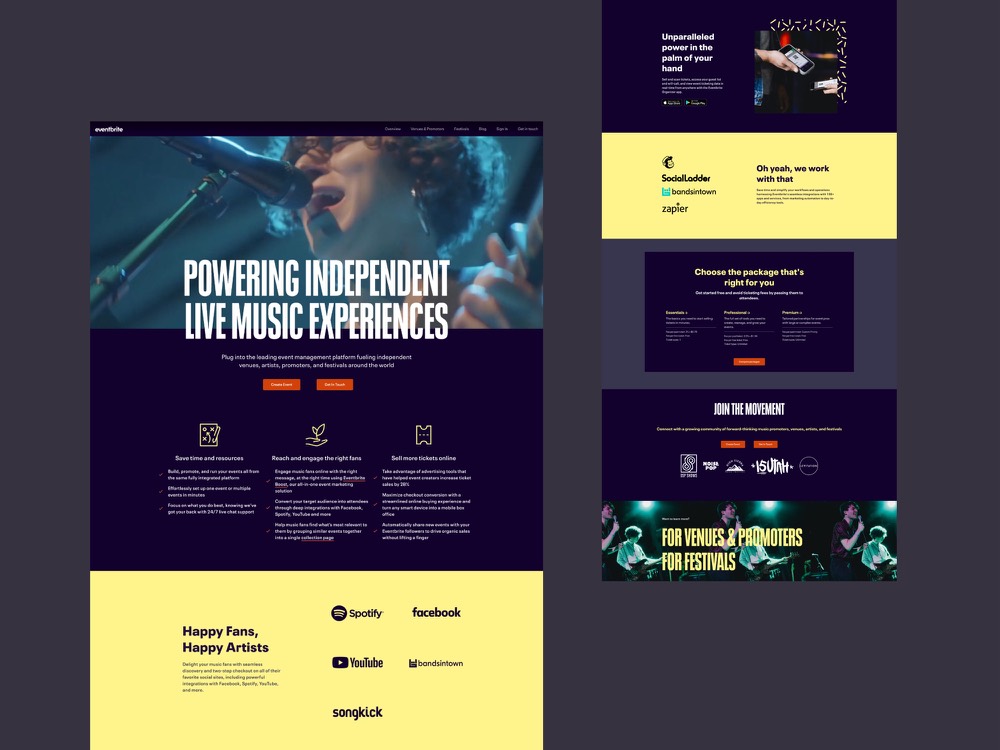
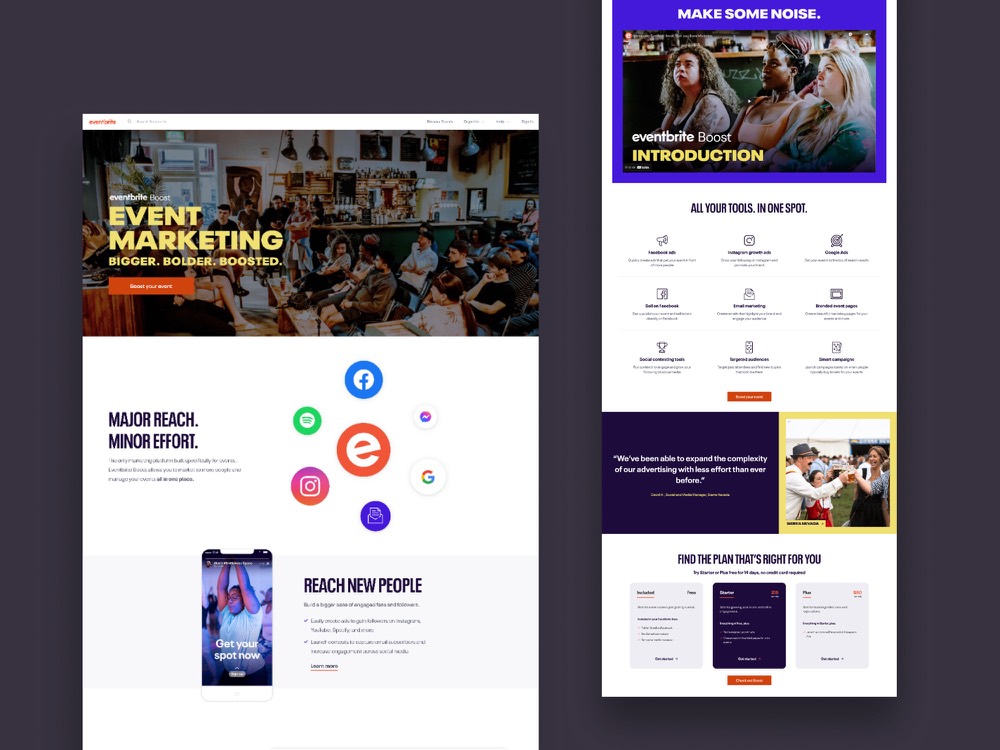
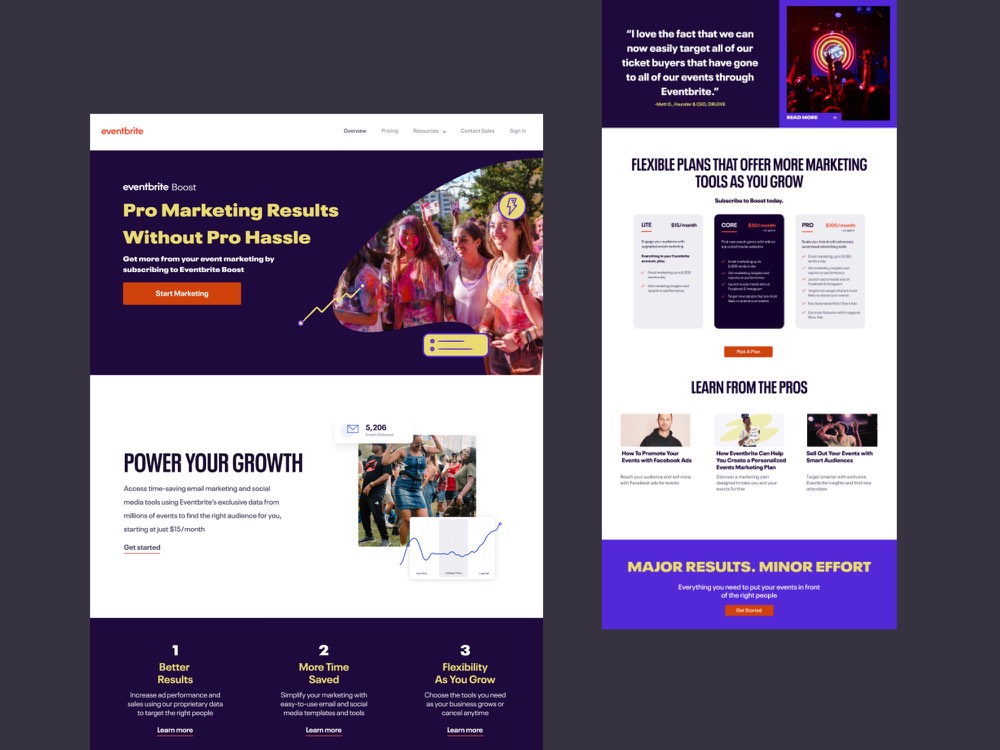
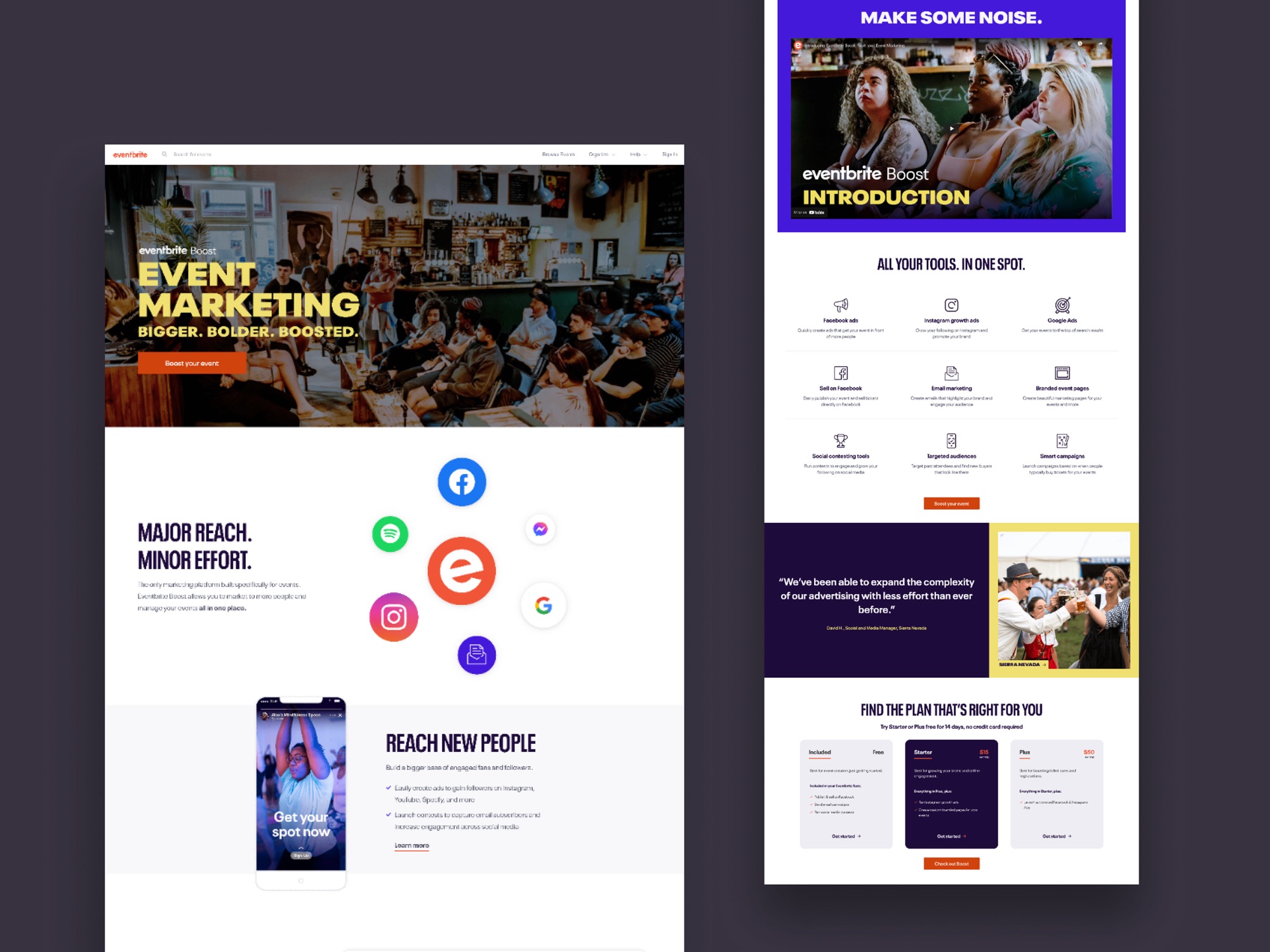
Eventbrite Boost landing page, desktop and phone.
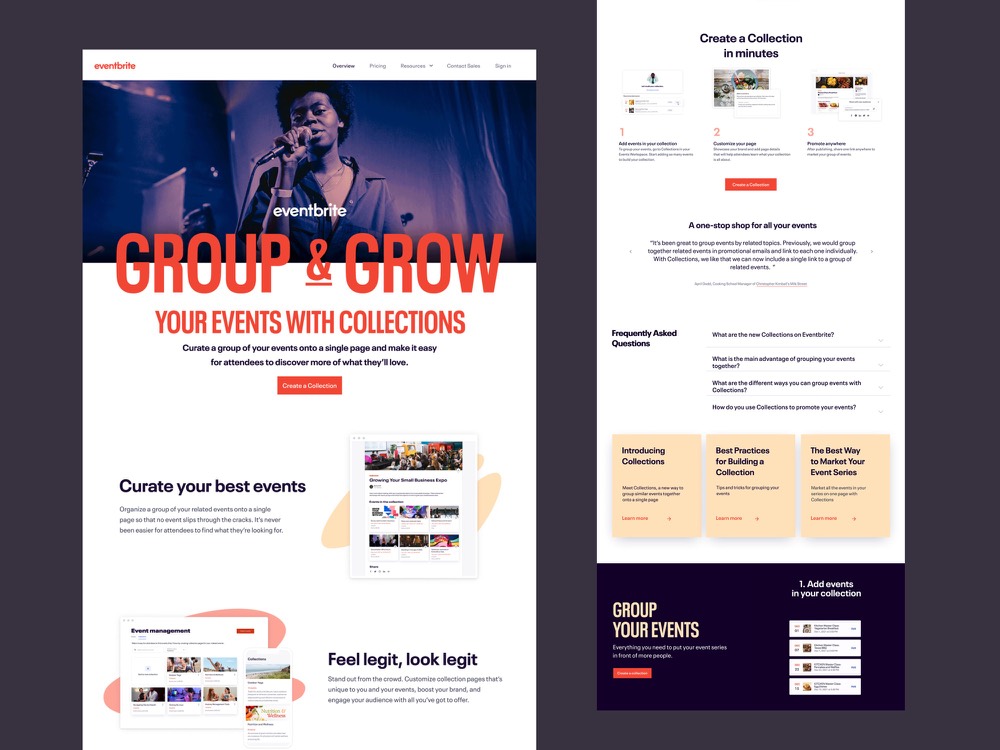
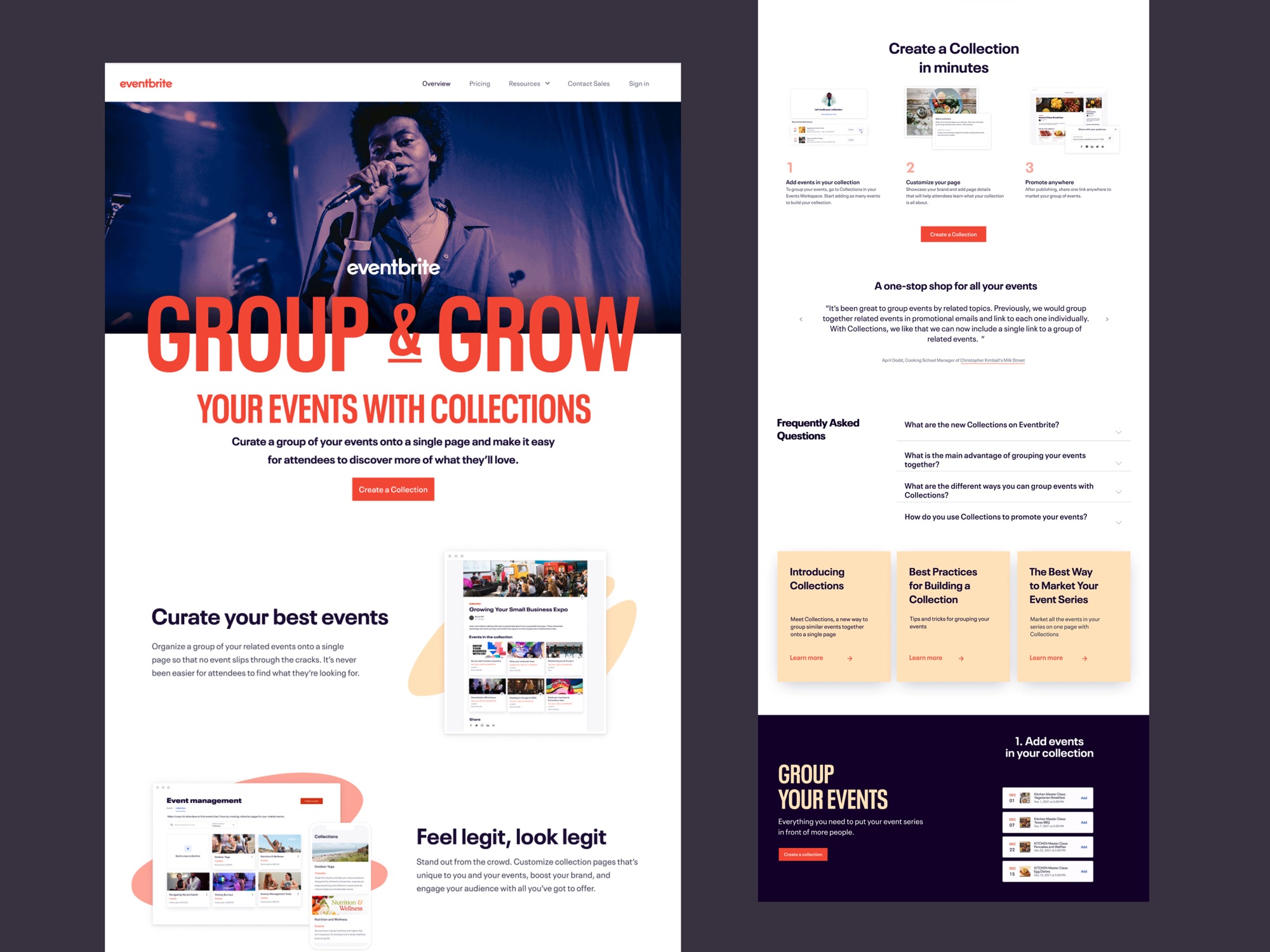
Eventbrite Collections landing page, desktop and phone.

About 25 components carried 40+ landing pages. A page that took about five days through design and build could go live in one.

01Where I started

I joined Eventbrite in 2017 as a Web Brand Designer, on a team that built custom event pages for global partners like Spotify, Budweiser, and Nintendo. Each page had to carry the partner’s identity inside Eventbrite’s brand rules, and the event date never moved.

The people on the other side were guests deciding whether to show up. The page was often the first thing they saw of the event, so it had to feel like the night they’d get.
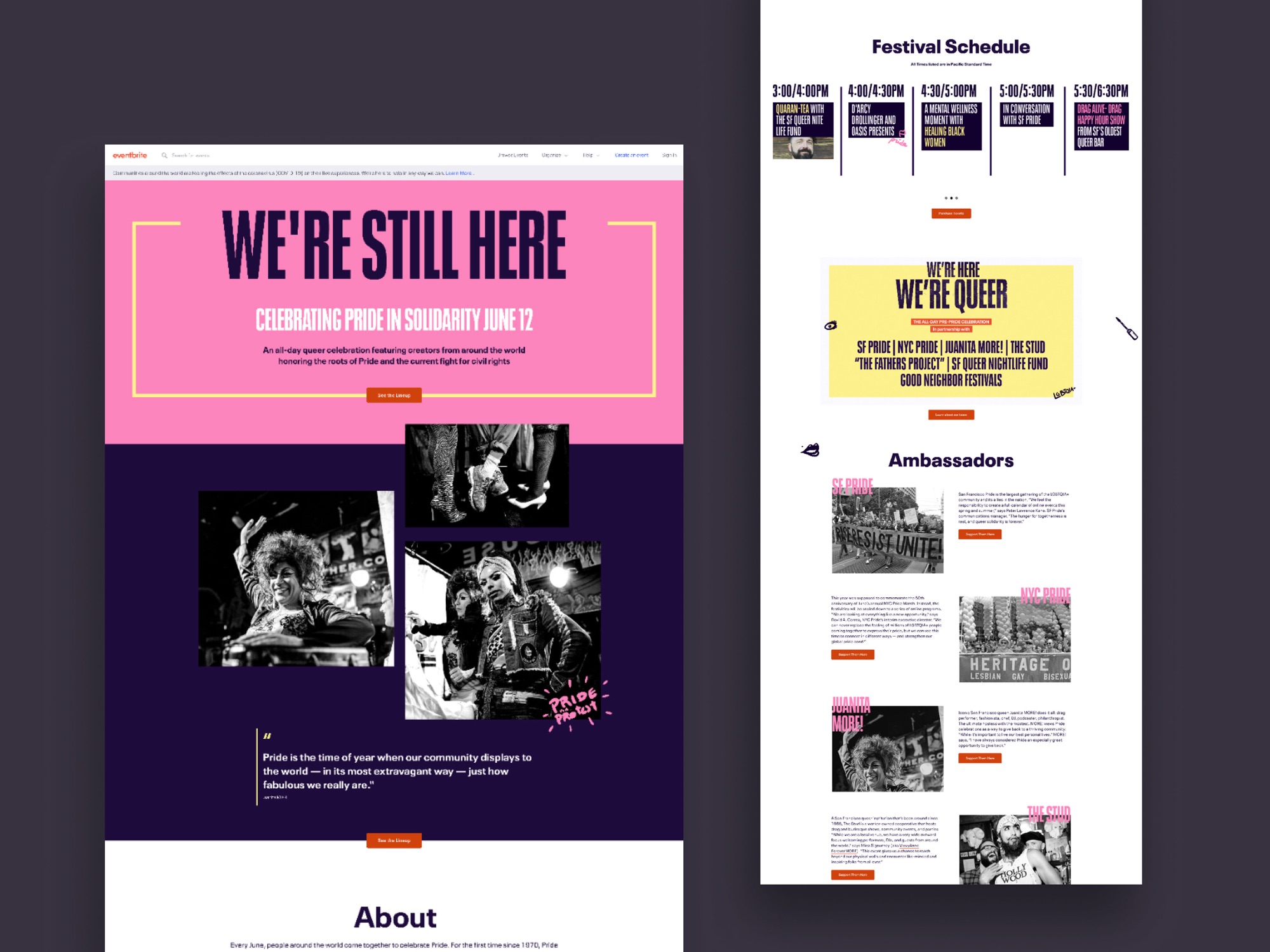
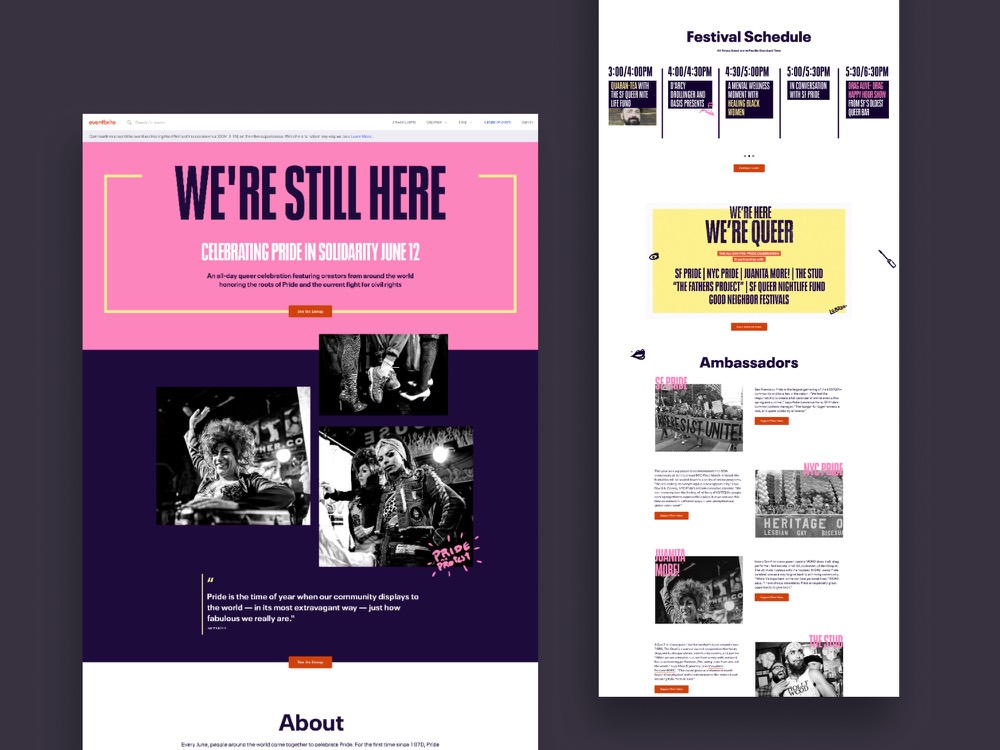
A Pride celebration event page, desktop and phone: We’re still here, the lineup and the festival schedule.
Pride, Brooklyn
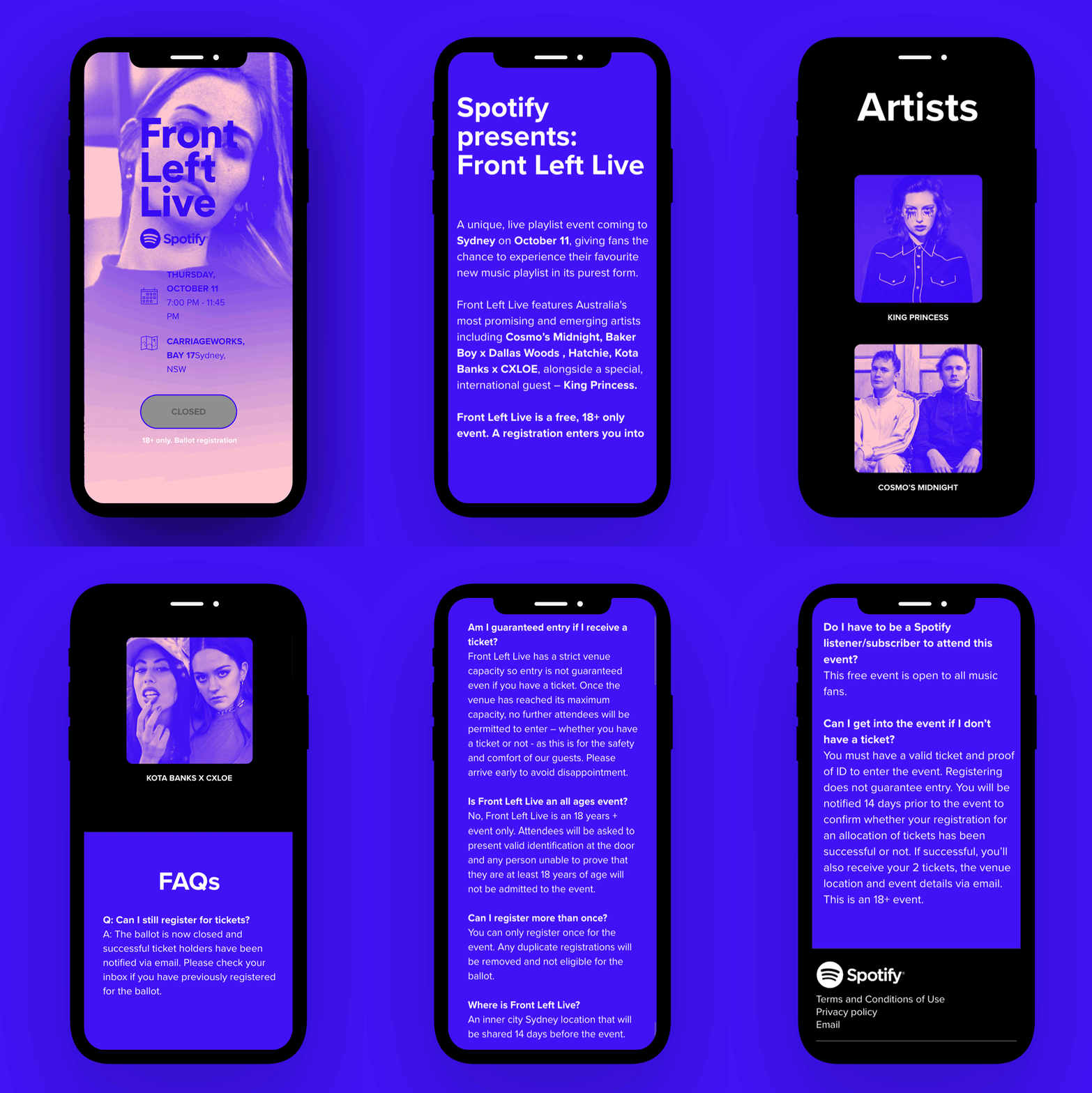
Spotify Front Left Live event page on a phone: the event, the artists, and the FAQ.
Spotify, Front Left Live
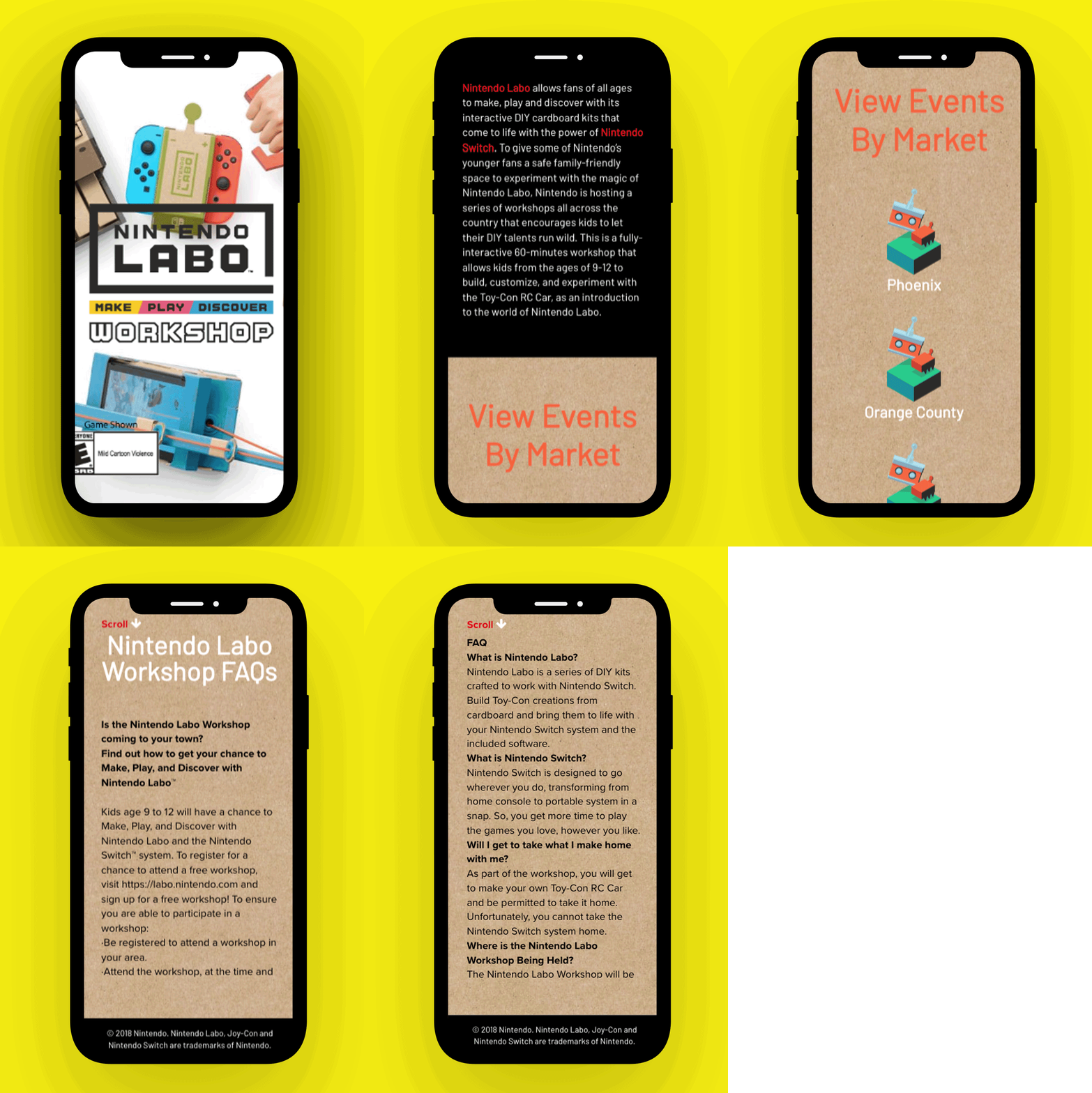
Nintendo Labo workshop event page on a phone.
Nintendo Labo

02Owning the landing pages

After about two years I moved to Brand Studio, Eventbrite’s in-house creative team, and became the only web designer for the company’s landing pages. The job grew from designing pages to deciding how they were built and kept up.

03Parts instead of pages

The marketing team kept asking for more pages, and each one waited on me. So I designed a set of components in Wagtail, the CMS behind the site: hero blocks, feature rows, pricing, quotes, and sign-up sections they could combine and edit on their own.

I had three goals for it: the team could launch a campaign without waiting on design, every page stayed on brand, and launches got faster without the pages getting worse. The system grew to about 25 components and carried 40+ landing pages.

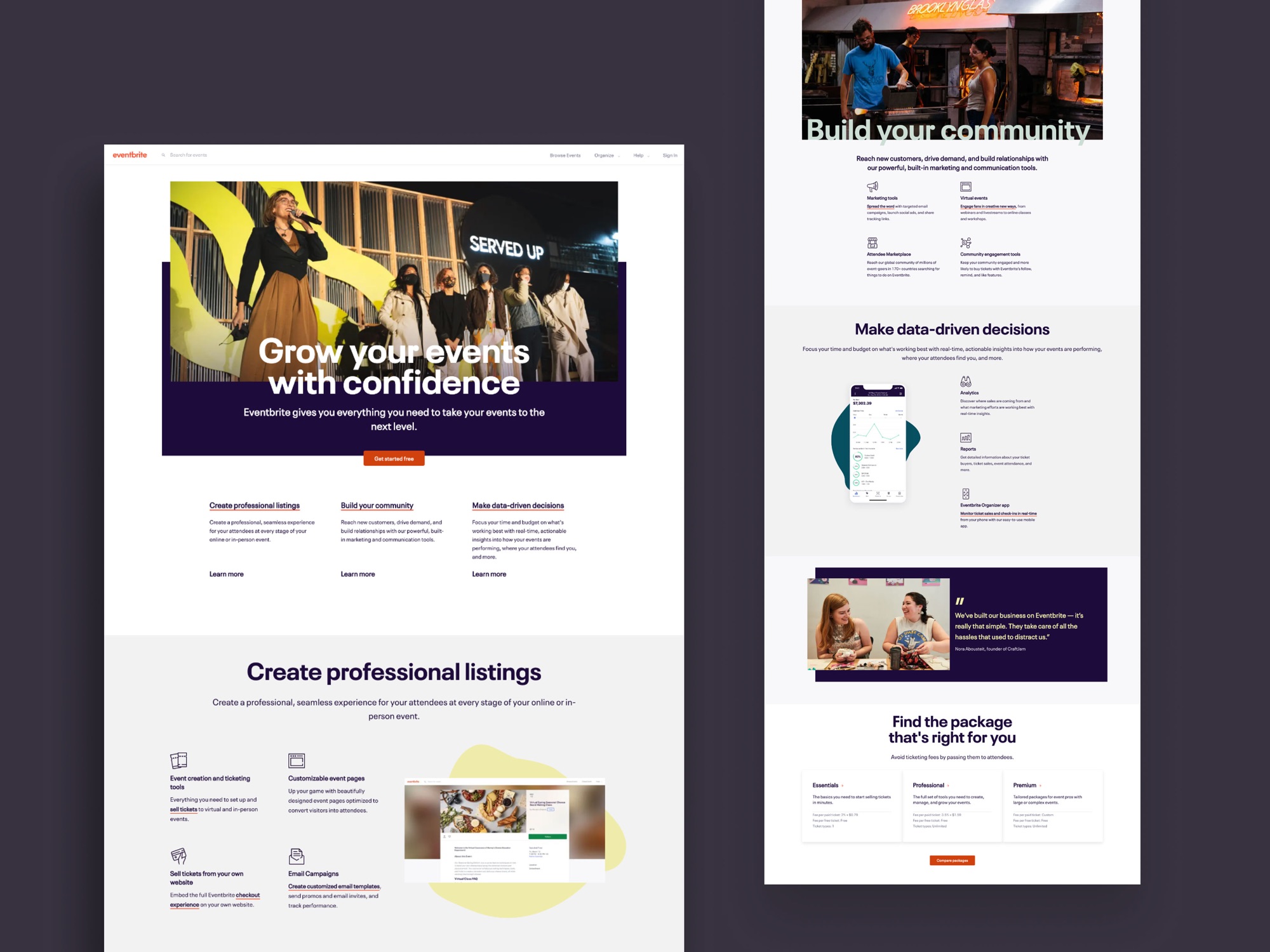
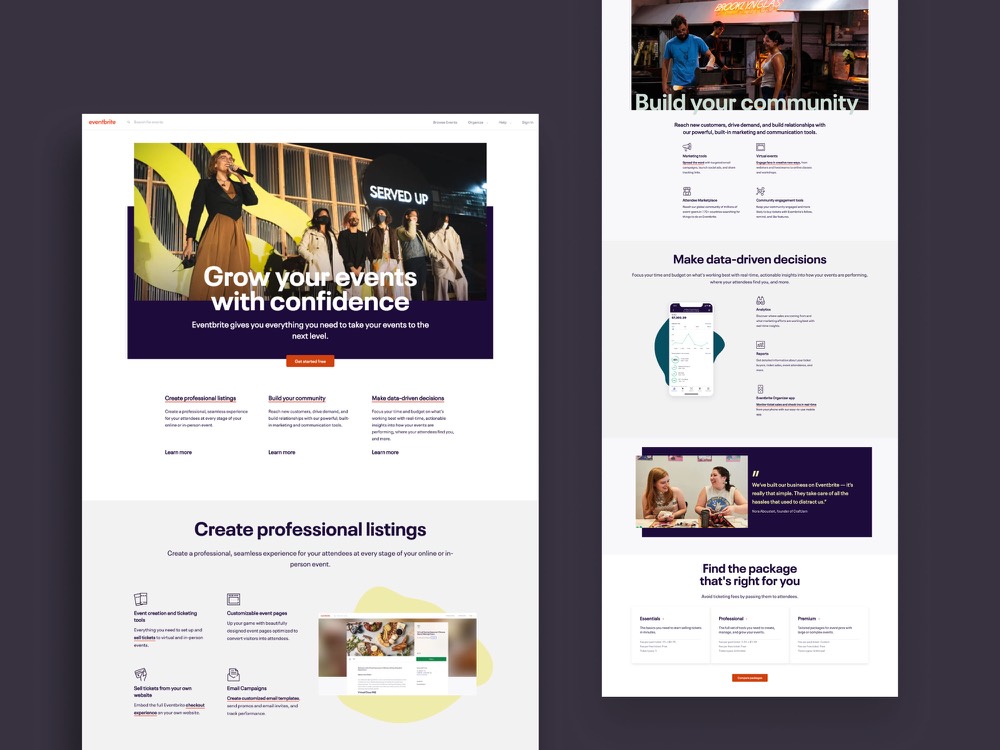
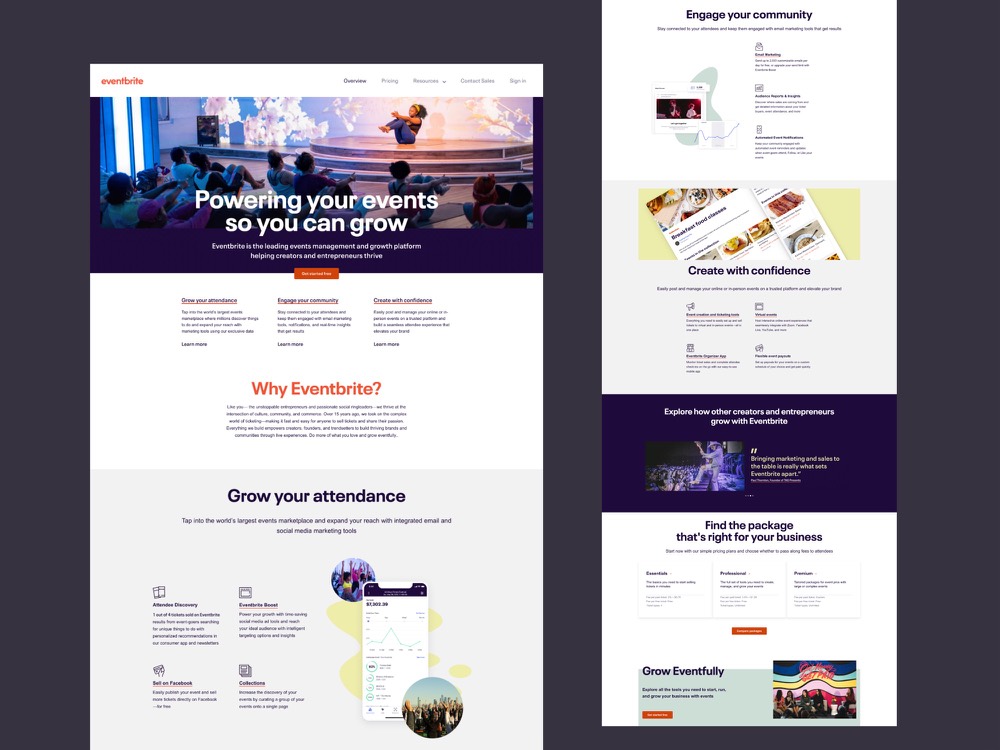
The Grow your events landing page, desktop and phone, built from the same parts.
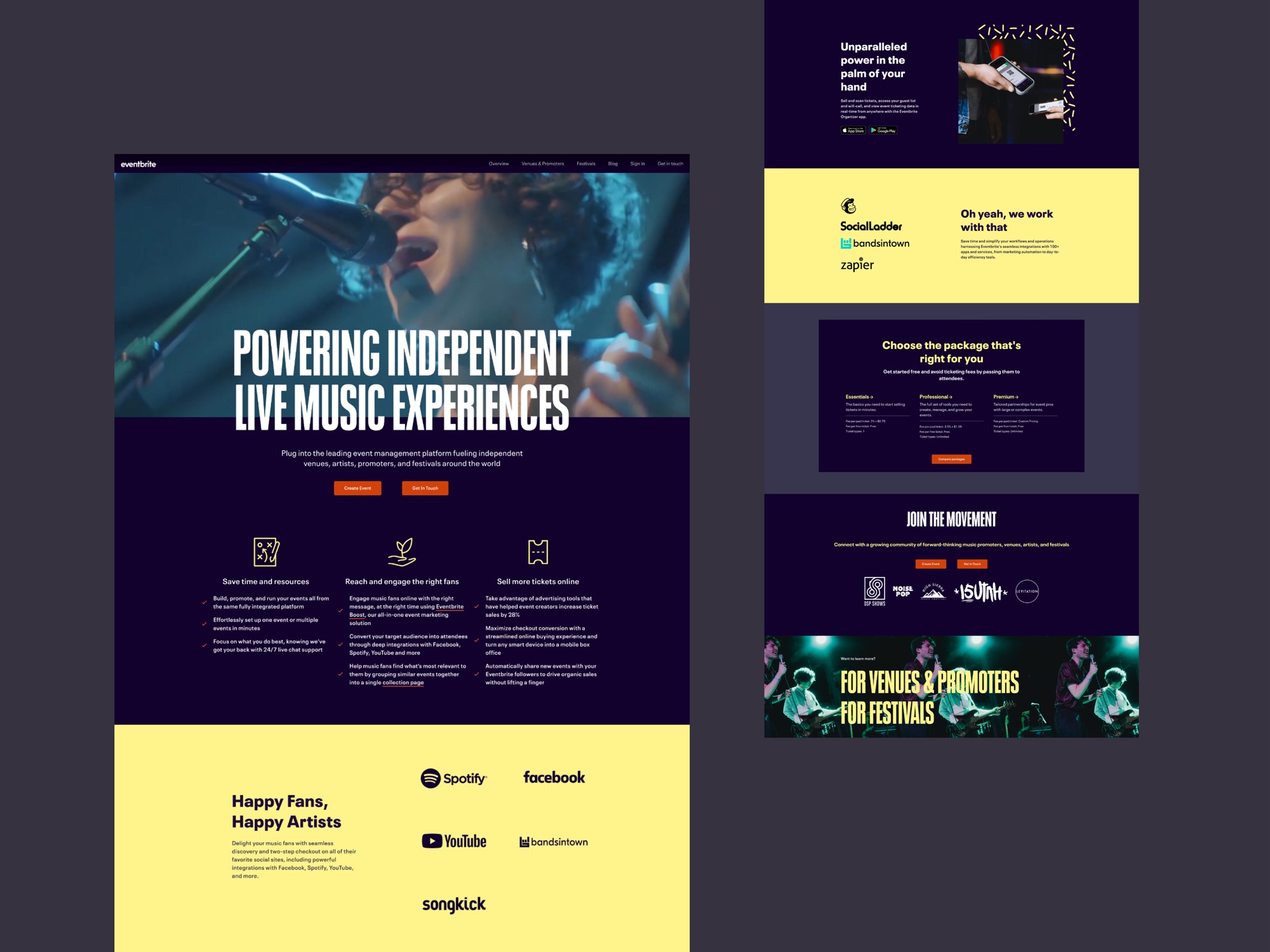
The music landing page for independent live events, desktop and phone, built from the same parts.

04Designing for creators

These pages talked to creators, the people who run events on Eventbrite and the platform’s core users. I was studying UX and UI at the time and put it to work here: clearer hierarchy, one main action per page, and small changes based on what the analytics showed.

05What changed

Before, only the web designer could make a landing page: a Jira ticket, the design, then about five days of build. With the system, the team put one together in a day, and 40+ went live without losing the brand.

06What I took from it

Eventbrite trusted me with a lot early on. It taught me to balance speed with care, and that a good system gives other people room to make things while it keeps the experience whole.

It’s the same idea behind every system I’ve built since, at TicketSocket and at UMG. I set up the parts so the time can go to the part that should feel made by a person.

More work